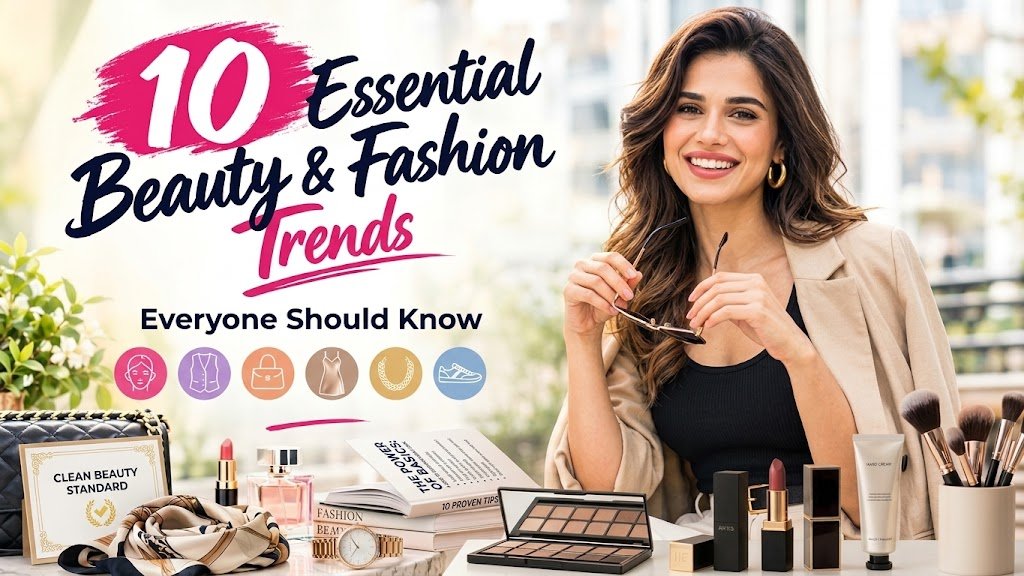
10 Essential Beauty & Fashion Trends Everyone Should Know
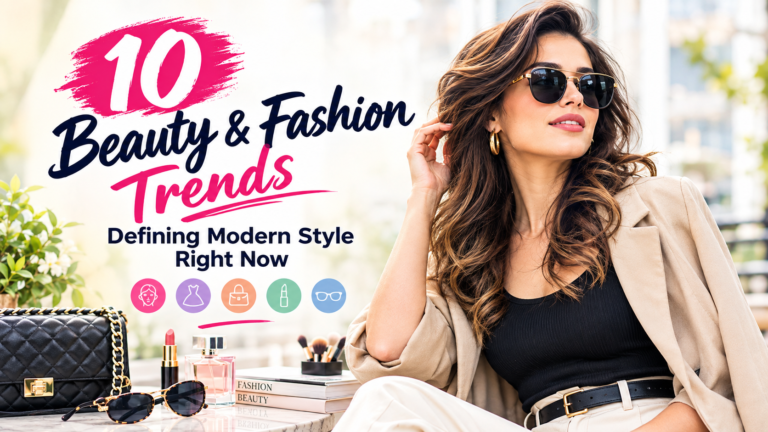
Which beauty and fashion trends are actually worth understanding? The most useful ones are not necessarily the most dramatic. They are the trends that influence how people approach wardrobes, silhouettes, beauty routines, accessories, comfort, and personal expression.
Here are 10 important developments and concepts that can help anyone understand contemporary style.
1. Minimalist Wardrobes
A minimalist wardrobe emphasizes versatility rather than a large number of garments.
The basic idea is simple: choose pieces that work with multiple outfits and suit your lifestyle. Neutral trousers, versatile shirts, denim, knitwear, outerwear, and dependable footwear can form a practical foundation.
Minimalism does not require owning a specific number of items. It is primarily about reducing unnecessary purchases.
2. Relaxed Silhouettes
A silhouette describes the overall shape created by clothing on the body.
Relaxed silhouettes include wide-leg trousers, oversized shirts, loose jackets, flowing dresses, and comfortable outer layers. They provide an alternative to closely fitted clothing.
Because oversized garments can add visual volume, proportion matters. Pairing a relaxed piece with a more defined item can create balance.
3. Skin-First Beauty
Skin-first beauty places skincare at the foundation of the overall beauty routine.
Cleansing, moisturizing, and sun protection are common starting points. Makeup can then be applied according to individual preferences and needs.
This approach does not mean abandoning makeup. Instead, skincare and makeup serve different purposes within the routine.
4. Versatile Denim
Denim remains important because it can move between casual and more polished outfits.
Straight-leg jeans, relaxed jeans, denim jackets, skirts, and other denim garments can be styled differently depending on footwear, tops, accessories, and outerwear.
Fit and comfort should guide the choice more than the popularity of a particular cut.
5. Statement Jewelry
Statement jewelry uses noticeable pieces to create a focal point.
Large earrings, layered necklaces, bold rings, cuffs, and distinctive watches can change a simple outfit without requiring different clothing.
When using statement jewelry, consider the neckline, hairstyle, clothing pattern, and other accessories so the overall look remains balanced.
6. Monochromatic Dressing
A monochromatic outfit uses different shades, tones, or variations of one color family.
For example, an outfit might combine cream trousers, a beige top, and a tan jacket.
The approach creates visual continuity while allowing texture, fabric, and silhouette to provide variation.
7. Comfortable Footwear
Everyday footwear increasingly has to meet practical needs as well as aesthetic ones.
Sneakers, loafers, flats, boots, and other comfortable styles can complement modern casual and smart-casual wardrobes.
Footwear should be selected according to the occasion, amount of walking, weather, dress requirements, and personal comfort.
8. Multi-Use Beauty Products
Multi-use products are designed to perform more than one function.
A product that can be used on both lips and cheeks, for example, may simplify a makeup bag. Compact palettes can also reduce the number of separate products needed when traveling.
The main advantage is convenience, not necessarily superior performance.
9. Personal Style and Mixed Aesthetics
People increasingly combine different fashion influences instead of committing to a single aesthetic.
Classic tailoring can be mixed with casual footwear. Vintage-inspired pieces can be paired with contemporary basics. Traditional garments can also be styled with modern accessories.
The result is a more individualized wardrobe.
10. More Thoughtful Purchasing
Understanding fashion increasingly involves understanding the practical life of a garment.
Before buying, consider fabric composition, construction, fit, care requirements, expected frequency of use, and compatibility with existing clothing.
This does not mean avoiding trends. It means choosing trends selectively and considering their long-term usefulness.
Final Takeaway
Beauty and fashion trends are most useful when they provide practical choices rather than strict rules. Understanding silhouettes, color relationships, wardrobe versatility, skincare basics, accessories, and footwear allows people to adapt trends to their own circumstances.
Knowing the principle behind a trend is often more valuable than simply copying its appearance.