
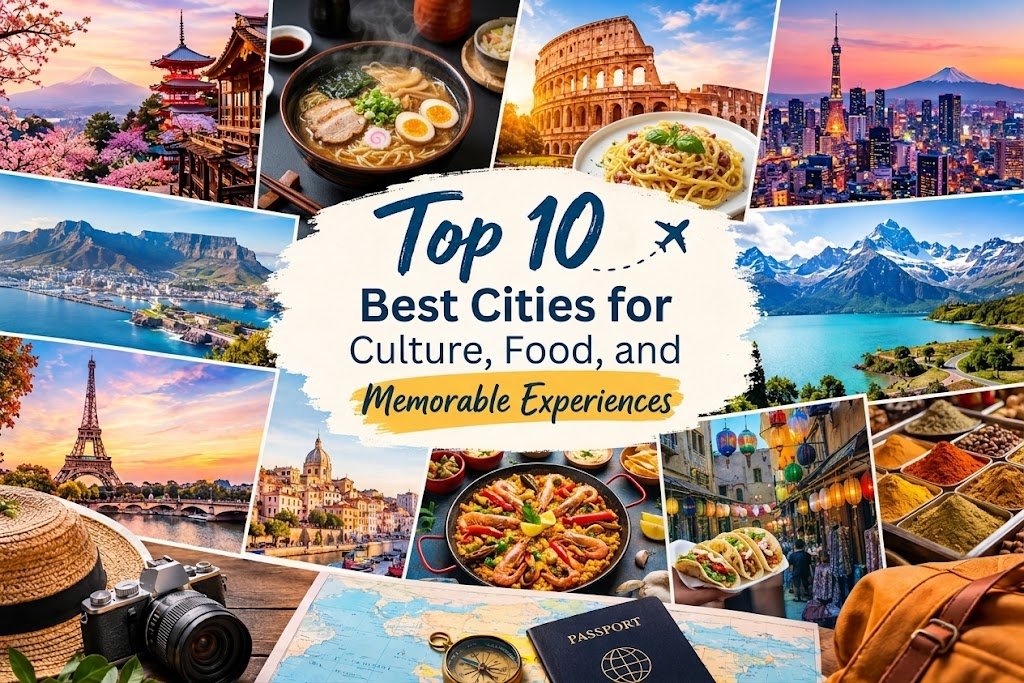
10 Best Cities for Culture, Food, and Memorable Experiences
If you want a trip that offers more than famous landmarks, the best city destinations are places where culture, food, history, neighborhoods, and everyday life intersect. A great city lets you spend the morning exploring a museum or historic district, the afternoon discovering local food, and the evening experiencing music, markets, festivals, or neighborhood life.
There is no single definition of the “best” city for every traveler. The 10 cities below stand out because they offer a particularly rich combination of cultural depth, distinctive cuisine, and experiences that are difficult to replicate elsewhere.
1. Tokyo, Japan — Where Tradition and Modern Life Meet
Tokyo combines centuries-old Japanese traditions with one of the world’s most dynamic modern urban cultures. Visitors can move from historic temples and shrines to contemporary architecture, design districts, department-store food halls, and lively entertainment areas within the same day.
Food is a major part of the experience. Tokyo offers everything from ramen, sushi, yakitori, soba, and tempura to neighborhood cafés and highly specialized restaurants. Its culinary reputation extends across both casual and fine dining; Food & Wine also included Tokyo among its 2026 global food-city selections.
Memorable experiences:
- Explore Asakusa and visit Sensō-ji.
- Walk through Shibuya and Shinjuku after dark.
- Try ramen, sushi, or an izakaya meal.
- Visit a Japanese garden or traditional neighborhood.
- Explore contemporary art, design, or architecture.
Best for: Travelers who want a mixture of traditional culture, food, technology, shopping, and neighborhood exploration.
2. Paris, France — Art, Architecture, Cafés, and French Cuisine
Paris is one of the world’s most recognizable cultural capitals, with an extraordinary concentration of museums, historic architecture, galleries, gardens, cafés, and monuments.
The city’s food culture is equally important. A Paris experience can be as simple as breakfast from a boulangerie and coffee at a neighborhood café or as elaborate as a traditional French dinner. The appeal is not limited to luxury dining; markets, bakeries, cheese shops, pâtisseries, and everyday restaurants are part of the city’s culinary identity.
Paris also rewards travelers who explore beyond its most famous attractions. Walking along the Seine, sitting in a neighborhood square, browsing a market, or spending an afternoon in a museum can be as memorable as visiting a major landmark.
Memorable experiences:
- Visit the Louvre or Musée d’Orsay.
- Walk along the Seine.
- Explore Montmartre.
- Try classic French pastries and bakery items.
- Spend an evening in a traditional bistro.
Best for: Art lovers, architecture enthusiasts, food travelers, couples, and first-time visitors to Europe.
3. Mexico City, Mexico — Deep History and an Extraordinary Food Scene
Mexico City brings together Indigenous heritage, Spanish colonial history, contemporary art, architecture, music, markets, and one of Latin America’s most exciting food cultures.
Its culinary identity stretches from everyday tacos and tamales to sophisticated contemporary restaurants. Recent international food coverage has highlighted Mexico City’s combination of traditional Mexican ingredients and modern culinary creativity.
The city’s cultural depth is especially apparent in its museums and historic neighborhoods. Travelers can move between archaeological heritage, colonial architecture, colorful markets, modern galleries, and lively residential districts.
Memorable experiences:
- Explore the historic center.
- Visit the Museo Nacional de Antropología.
- Eat tacos at local taquerías.
- Explore Coyoacán and its markets.
- Discover contemporary art and neighborhood cafés.
Best for: Travelers seeking history, museums, street food, art, and a large-city atmosphere with strong local identity.
4. Istanbul, Türkiye — A City Shaped by Continents and Empires
Istanbul is distinctive because its geography and history are inseparable from its cultural identity. Positioned around the Bosphorus between Europe and Asia, the city has been associated with major political, religious, and artistic developments for more than two millennia. UNESCO identifies the city’s historic areas as a World Heritage property.
Its food culture reflects the same layers of history. Turkish breakfasts, kebabs, meze, seafood, simit, baklava, Turkish coffee, and other regional specialties make eating an integral part of exploring the city.
A ferry ride across the Bosphorus can itself become part of the sightseeing experience.
Memorable experiences:
- Explore the historic Sultanahmet area.
- Visit Hagia Sophia and other major historic monuments.
- Browse the Grand Bazaar or Spice Bazaar.
- Take a Bosphorus ferry ride.
- Enjoy Turkish breakfast, meze, and traditional desserts.
Best for: History enthusiasts, food travelers, photographers, and anyone interested in the meeting of European and Asian cultures.
5. Rome, Italy — Ancient History Meets Everyday Italian Life
Rome offers an unusually direct connection to history. Ancient Roman ruins, Renaissance and Baroque architecture, churches, fountains, piazzas, and museums exist alongside modern restaurants, cafés, shops, and residential neighborhoods.
The historic center is part of UNESCO’s World Heritage listing, while Italy as a whole contains numerous internationally recognized cultural sites.
Food is another reason Rome is memorable. Roman specialties such as carbonara, cacio e pepe, amatriciana, supplì, pizza al taglio, and gelato provide plenty of opportunities to experience the city through its everyday cuisine.
Memorable experiences:
- Walk around the Colosseum and Roman Forum.
- Visit the Pantheon.
- Explore Trastevere.
- Try classic Roman pasta.
- Spend an evening in a lively piazza.
Best for: Ancient-history lovers, architecture enthusiasts, food travelers, and travelers who enjoy exploring on foot.
6. Bangkok, Thailand — Street Food, Temples, Markets, and Nightlife
Bangkok is a city where traditional culture and fast-moving modern life exist side by side. Buddhist temples, markets, canals, shopping districts, contemporary restaurants, street-food stalls, and nightlife create an unusually varied urban experience.
Food is central to the city. Street stalls and neighborhood restaurants offer dishes such as pad Thai, tom yum, boat noodles, som tam, grilled meats, curries, and mango sticky rice. In 2026, Bangkok was again prominent in international food-city coverage, including Food & Wine’s global list and Time Out’s food-city ranking.
Memorable experiences:
- Visit the Grand Palace and Wat Pho.
- Explore Chinatown’s food scene.
- Take a boat along Bangkok’s waterways.
- Visit a traditional market.
- Eat street food after sunset.
Best for: Food lovers, first-time Southeast Asia travelers, shoppers, photographers, and travelers who enjoy energetic cities.
7. Barcelona, Spain — Architecture, Catalan Culture, and Mediterranean Food
Barcelona combines Mediterranean lifestyle with distinctive Catalan culture and some of Europe’s most recognizable architecture.
Antoni Gaudí’s work gives the city an architectural identity unlike almost anywhere else. At the same time, neighborhoods such as the Gothic Quarter and Barceloneta offer very different experiences, from historic streets to seaside dining.
Barcelona’s food culture includes Catalan cooking, Mediterranean ingredients, tapas-style dining, seafood, markets, and an increasingly diverse contemporary restaurant scene. Time Out’s 2026 food coverage highlighted both Barcelona’s modern culinary scene and renewed interest in traditional Catalan dishes.
Memorable experiences:
- Visit Sagrada Família.
- Explore Park Güell.
- Walk through the Gothic Quarter.
- Visit La Boqueria and other food markets.
- Enjoy seafood or Catalan dishes near the coast.
Best for: Architecture lovers, beach travelers, foodies, photographers, and travelers looking for culture with a Mediterranean atmosphere.
8. New Orleans, United States — Music, Creole Food, and a Distinctive Cultural Identity
New Orleans offers a cultural experience that is strongly connected to music, food, architecture, festivals, and local traditions.
Jazz is central to the city’s identity, while Creole and Cajun influences shape much of its food culture. Gumbo, jambalaya, po’boys, crawfish dishes, red beans and rice, and beignets are among the foods associated with the city.
The French Quarter provides historic architecture and nightlife, while neighborhoods such as the Garden District offer a different perspective on the city’s character.
Memorable experiences:
- Hear live jazz in a local venue.
- Walk through the French Quarter.
- Explore the Garden District.
- Try gumbo, jambalaya, or a po’boy.
- Visit during a cultural or music festival when timing permits.
Best for: Music lovers, food travelers, history enthusiasts, and travelers who want a strong local cultural atmosphere.
9. Lisbon, Portugal — Historic Streets, Seafood, and Fado
Lisbon offers a combination of historic neighborhoods, Portuguese cuisine, river views, tiled architecture, nightlife, and traditional music.
The city is particularly rewarding when explored slowly. Neighborhoods such as Alfama reveal narrow streets, viewpoints, old buildings, and traditional restaurants. Portuguese food ranges from seafood and grilled fish to bacalhau, petiscos, pastries, and the famous pastel de nata.
Lisbon’s contemporary food scene has also developed significantly. Time Out’s 2026 food-city coverage included Lisbon among its top 10 food destinations, noting both its traditional food culture and newer neighborhood restaurants.
Memorable experiences:
- Explore Alfama on foot.
- Listen to traditional fado.
- Visit Belém.
- Try pastel de nata.
- Eat seafood and Portuguese-style small plates.
Best for: Travelers seeking history, food, music, architecture, and a relatively relaxed European city atmosphere.
10. Kyoto, Japan — Temples, Gardens, Tea Culture, and Traditional Cuisine
Kyoto offers a different experience from Tokyo. While Tokyo represents Japan’s enormous modern metropolis, Kyoto provides an opportunity to explore traditional architecture, Buddhist temples, Shinto shrines, gardens, tea culture, crafts, and historic districts.
The city’s cultural importance is internationally recognized. UNESCO’s World Heritage listing includes the Historic Monuments of Ancient Kyoto, covering sites across Kyoto, Uji, and Otsu.
Kyoto’s culinary traditions are equally distinctive. Visitors can encounter kaiseki cuisine, tofu dishes, seasonal ingredients, matcha-based foods, traditional sweets, and everyday Japanese dining.
Memorable experiences:
- Walk through Gion and Higashiyama.
- Visit Fushimi Inari Taisha.
- Explore historic temples and gardens.
- Experience a tea-related cultural activity.
- Try seasonal Kyoto cuisine.
Best for: Travelers interested in Japanese history, traditional culture, gardens, architecture, tea, and food.
Quick Guide: Which City Fits Your Travel Style?
| Travel Interest | Cities to Consider |
|---|---|
| Traditional culture | Kyoto, Istanbul, Rome |
| World-class museums and art | Paris, Tokyo, Mexico City |
| Street food | Bangkok, Mexico City, Istanbul |
| Fine dining + local cuisine | Tokyo, Paris, Barcelona |
| Ancient history | Rome, Istanbul, Kyoto |
| Music and nightlife | New Orleans, Bangkok, Paris |
| Architecture | Barcelona, Paris, Rome |
| Markets and everyday food culture | Bangkok, Mexico City, Istanbul |
| Mediterranean atmosphere | Barcelona, Lisbon |
| First major international city trip | Paris, Tokyo, Rome |
How to Choose Among the 10 Best Cities
The right choice depends on what you want your days to feel like.
Choose Tokyo if you want enormous variety, Japanese tradition, modern urban culture, and an exceptionally broad food scene.
Choose Paris if museums, architecture, cafés, art, and classic European culture are central to your trip.
Choose Mexico City if you want museums, Indigenous and Mexican heritage, markets, contemporary culture, and outstanding casual food.
Choose Istanbul if you want history, religious architecture, bazaars, Turkish cuisine, and the experience of a city connecting Europe and Asia.
Choose Rome if ancient history and Italian food are your priorities.
Choose Bangkok if street food, temples, markets, nightlife, and Southeast Asian urban energy appeal to you.
Choose Barcelona if you want architecture, Catalan culture, Mediterranean food, and access to the coast.
Choose New Orleans if music and distinctive regional cuisine are major reasons for traveling.
Choose Lisbon if you want historic neighborhoods, seafood, pastries, traditional music, and a relaxed European atmosphere.
Choose Kyoto if your priority is experiencing traditional Japanese culture, temples, gardens, tea, and seasonal cuisine.
Final Thoughts
The most memorable city trips are rarely built entirely around famous attractions. They come from combining the major sights with local food, neighborhood walks, cultural traditions, markets, music, and unplanned discoveries.
These 10 cities offer different versions of that experience. Tokyo and Kyoto reveal contrasting sides of Japanese culture; Paris and Rome connect food with centuries of European history; Mexico City and Bangkok demonstrate how street food can become part of a city’s cultural identity; Istanbul connects continents and empires; Barcelona and Lisbon combine historic character with contemporary life; and New Orleans shows how music and cuisine can define an entire urban experience.
Rather than asking which city is universally “best,” consider what you want to remember when the trip is over: a museum, a meal, a neighborhood, a piece of architecture, a song, a market, or a conversation with the place itself.